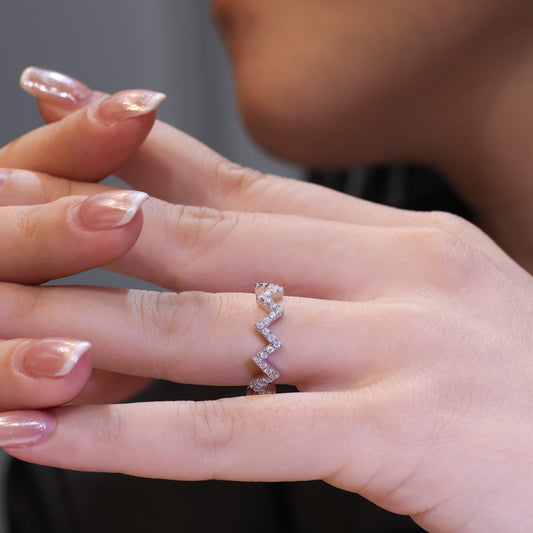
The Hidden Risks: What Happens When You Wear a Silver Engagement Ring and a Gold Wedding Ring Together?
huangzupengMixing metals used to be a fashion statement. Today, it’s almost a rite of passage.
A silver engagement ring and a gold wedding ring worn side by side can look beautifully modern — that soft contrast between cool silver and warm gold feels effortless, personal, even a little rebellious against traditional “matchy-matchy” bridal sets.
But here’s the truth most jewelry stores don’t tell you:
When a silver engagement ring and gold wedding ring touch every day, there are hidden physical and visual risks that can shorten the life of your rings if you don’t plan correctly.
I’ve seen this happen more times than I can count. A bride comes in six months after her wedding. Her 925 silver engagement ring has faint dents along the side. Her gold band has tiny silver scuff marks. Nothing catastrophic — yet — but the warning signs are there.
So let’s talk honestly about what happens when silver meets gold. And more importantly — how to wear them together beautifully, safely, and intentionally.

Why So Many Couples Choose a Silver Engagement Ring and Gold Wedding Ring
First, let’s acknowledge why this pairing is so popular.
A silver engagement ring (especially S925 sterling silver) offers a bright, modern look and makes larger stones more accessible. A gold wedding ring, on the other hand, carries heritage — warmth, tradition, and long-term durability.
Together, a silver engagement ring and gold wedding ring create contrast:
Modern + classic
Light + warmth
Style + heritage
Aesthetically? Gorgeous.
Structurally? It needs a little engineering.
Hidden Risk #1: Hardness Difference — Silver Will Lose the Battle
This is the most important technical point — and almost nobody explains it clearly.
14K and 18K gold are harder than 925 sterling silver.
| Metal | Relative Hardness | Daily Wear Behavior |
|---|---|---|
| 925 Sterling Silver | Softer | Prone to dents and deformation |
| 14K Gold | Higher | Excellent everyday durability |
| 18K Gold | Medium-High | Slightly softer than 14K, still stronger than silver |
When a silver engagement ring and gold wedding ring sit flush together, friction happens constantly — walking, washing hands, gripping objects. Over time, the harder gold band acts like fine sandpaper against the softer silver ring.
Result:
• Micro dents on silver
• Flattened edges
• Distorted settings in extreme cases
This doesn’t happen overnight. It happens quietly — month by month.
The Professional Fix: Add a Spacer Ring
A spacer ring is a thin, simple band placed between your silver engagement ring and gold wedding ring. It absorbs friction so the two main rings never grind directly against each other.
It’s nearly invisible.
It’s inexpensive.
And it dramatically extends the lifespan of your silver engagement ring.
In workshops, we consider spacer rings standard practice whenever a silver engagement ring and gold wedding ring are worn together daily.
Hidden Risk #2: Color Mismatch Over Time
Freshly polished silver and gold look crisp together. But after months of wear:
• Silver can develop subtle oxidation
• Gold maintains its warm glow
• The contrast can start to look accidental instead of intentional
Some people describe it as:
“The silver starts to look cheaper next to the gold.”
That’s not a silver problem. That’s a finishing problem.

The Professional Fix: Rhodium Plating
Re-plating your silver engagement ring with Rhodium Plating solves this beautifully.
Rhodium:
• Gives silver a bright white-gold appearance
• Adds surface hardness
• Reduces tarnish
• Creates visual harmony with white gold or platinum
After rhodium plating, a silver engagement ring and gold wedding ring pairing looks clean, deliberate, and premium — not mismatched.
Many high-end brands quietly do this by default. Now you know why.
Hidden Risk #3: The Pairing Can Look “Unplanned” Without a Bridge
This is purely aesthetic — but it matters.
When a silver engagement ring sits directly next to a yellow or rose gold wedding band, the transition can sometimes feel abrupt. Not wrong — just unfinished.
The Professional Fix: Two-Tone Bridge Rings
Two-tone gold bands solve this elegantly.
A two-tone wedding ring includes:
• A silver-toned or white gold section
• A yellow or rose gold section
This creates a visual bridge between your silver engagement ring and gold wedding ring, making the combination feel:
• Intentional
• Designed
• High-end
• Stylistically confident
Instead of “mixed because we couldn’t decide,” it reads as:
“Mixed because we know exactly what we’re doing.”
That distinction matters in fine jewelry design.
But Is It Still Safe to Wear a Silver Engagement Ring and Gold Wedding Ring Together?
Yes — absolutely — when done correctly.
Here’s the safe formula:
• Silver engagement ring (preferably rhodium plated)
• Thin spacer ring in between
• Gold wedding ring (14K ideal for daily wear)
This setup:
• Prevents metal-on-metal grinding
• Preserves stone settings
• Keeps color harmony
• Maintains long-term comfort
Simple. Professional. Proven.
Why 14K Gold Is the Smart Partner for Silver
One more insider tip:
Many people assume 18K gold is always “better.” But if you’re pairing with silver, 14K gold is often the smarter choice.
It’s:
• Harder than 18K
• More scratch-resistant
• Better suited for daily contact wear
If you’re building a silver engagement ring and gold wedding ring set meant for real life — cooking, working, traveling — 14K gold simply holds up better.
Many jewelers won’t tell you this because higher karat sounds more luxurious. In practice, 14K wins for longevity.
The Emotional Side: Mixed Metals Tell a Story
There’s also something quietly beautiful about this pairing.
A silver engagement ring often represents modern love — flexible, personal, design-forward.
A gold wedding ring represents tradition — permanence, legacy, continuity.
Wearing a silver engagement ring and gold wedding ring together says:
“We honor tradition.
But we write our own rules.”
That’s exactly how modern couples love today.
Final Thoughts: Mixed Metals Are Beautiful — When Done Right
Wearing a silver engagement ring and gold wedding ring together isn’t a mistake.
It’s a design choice.
But like any fine design, it works best when engineered with intention.
• Understand hardness
• Add a spacer
• Use rhodium plating
• Consider two-tone bridges
• Choose 14K gold for durability
Do this, and your rings won’t just look beautiful on day one.
They’ll stay beautiful for decades.
And that — more than any metal — is what real luxury means.